Zero waste lunch: 5 container systems that keep food fresh without leaks
 Save
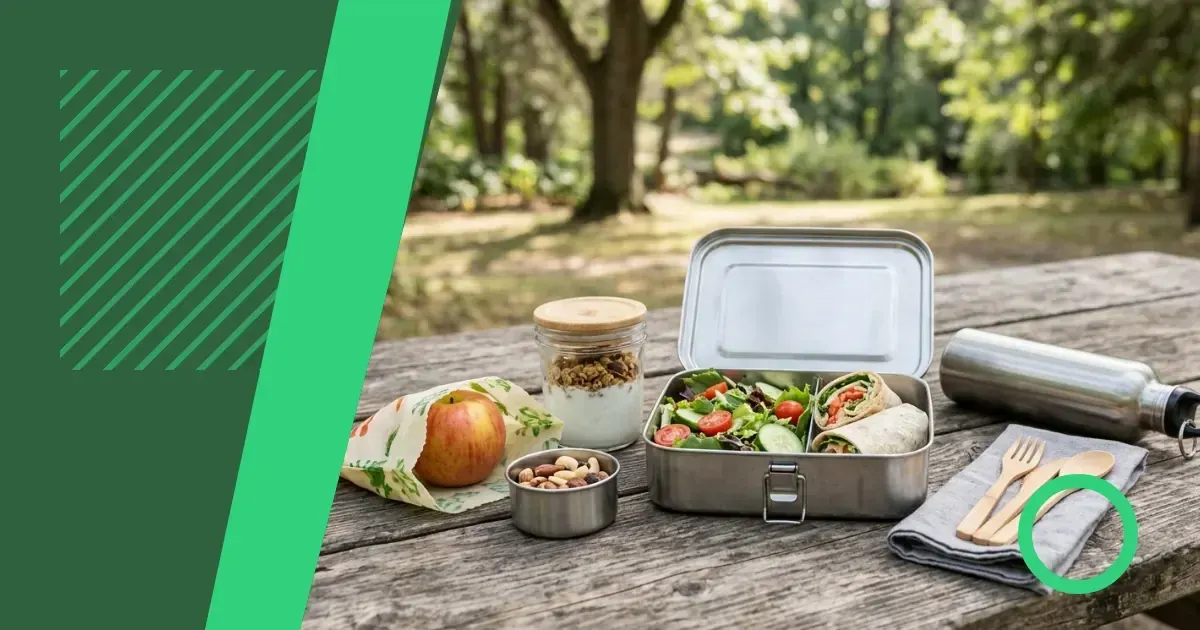
A zero waste lunch replaces single-use packaging with reusable containers and wraps that keep food fresh, travel well and wash clean at the end of the day. The right system depends on what you pack, where you eat and how much space you have. Ecomojo compares five approaches by what they hold best, then breaks down the choices for different lunch styles.
Stainless steel tins for sandwiches and wraps
Flat rectangular tins with tight lids suit sandwiches, wraps and flatbreads. The metal doesn't take on smells, stains or grease marks. A single-layer tin holds one sandwich; stacked tins with clips let you carry a main and a side without them touching.
Most lids seal with a silicone strip that presses into a groove. Check the strip sits evenly all the way round before you close the bag. Tins without a seal work for dry foods such as biscuits or crackers but let air reach anything moist.
Stainless steel doesn't go in the microwave. If you heat lunch at work, transfer the food to a ceramic dish or eat it cold.
Glass jars for salads and grain bowls
Wide-mouth jars with screw lids hold layered salads, pasta, rice bowls and overnight oats. Glass shows what's inside, goes in the microwave without the lid and doesn't hold flavours between uses.
Layer dressing or sauce at the bottom, then grains or sturdy vegetables, then leaves or soft ingredients at the top. Shake or tip into a bowl when you're ready to eat. A jar with straight sides rather than a shoulder makes it easier to reach the bottom.
Glass is heavier than metal or plastic. Carry it in a padded sleeve or wrap it in a tea towel inside your bag. A clip-top jar with a rubber seal costs more but closes faster than a screw lid.
Beeswax wraps for fruit, cheese and baked goods
Cotton fabric coated with beeswax moulds around food when you press it with warm hands. The wax holds the shape as it cools. Wraps suit whole fruit, cheese, half an avocado, muffins and bread rolls.
Fold the wrap over the food and press the edges together, or gather it at the top and secure with a rubber band. Beeswax wraps breathe slightly, so cheese and bread don't sweat. They won't seal a container of soup or hold anything very wet.
Wash in cool water with a drop of washing-up liquid, air-dry and fold flat. Heat melts the wax. Most wraps last a year before the coating wears thin. Vegan versions use plant wax or resin instead of beeswax.
What not to wrap in wax cloth
Raw meat, fish and anything with a strong smell transfer to the fabric. Use a sealed container for those. Very hot food softens the wax; let baked goods cool to warm before wrapping.
Silicone bags for wet foods and snacks
Reusable silicone bags zip or roll shut and hold soups, stews, cut fruit, vegetables and anything with liquid. They're lighter than glass, flexible enough to fit odd corners of a bag and safe to freeze.
Turn the bag inside out to wash it properly. Stand it open on the draining board or hang it from a peg until it's completely dry inside. A damp bag smells musty after a few hours in a closed lunch bag.
Silicone withstands heat, but most zip bags aren't designed to go in the microwave while sealed. Check before you buy. Some brands let you reheat with the top open.
Cloth napkins and tea towels for wrapping and bundling
A square of cotton or linen folds around a sandwich, wraps a bundle of snacks or lines a tin to stop things sliding. Furoshiki is a Japanese method of folding and knotting cloth to carry food; a simple version ties two opposite corners over the top and the other two underneath.
Cloth absorbs a little moisture, which keeps bread from going soggy in a long bag. Wash it with your usual laundry. Keep one napkin just for lunch so it doesn't end up in the general tea-towel rotation.
Choosing containers by what you pack most often
If you eat sandwiches or wraps more than three days a week, a stainless steel tin pays for itself in saved cling film within a month. Salads and grain bowls suit jars; pack dressing separately in a small screw-top bottle if you prefer it on the side.
Snack-sized containers stop you reaching for single-use packets. A set of three small tins or jars holds nuts, dried fruit, chopped vegetables or crackers. Label the lids with a permanent marker so you know which one holds what without opening them all.
For leak-proof options, read our guide to plastic-free food storage, which covers materials and seals in more detail.
Packing a zero waste lunch in six steps
- Choose three containers that suit your usual lunch: one for the main, one for a side, one for snacks or fruit.
- Prep the night before so the containers go straight into the bag in the morning.
- Pack a cloth napkin to wipe your hands and wrap any leftovers you bring home.
- Add reusable cutlery if you need it, tied in the napkin or clipped to the outside of the bag.
- Use an insulated bag for anything that needs to stay cool until lunchtime.
- Bring everything home at the end of the day, even if you ate out and didn't use it.
What to do when the canteen only has disposable plates
Eat from your own container when you can. If the meal comes on a disposable plate, scrape it into your reusable tin and hand the plate back. Some workplaces and schools ask you to return trays and crockery to a hatch; ask if you can do the same with single-use items so they're collected for recycling.
Carrying your own container to a canteen feels conspicuous at first. It stops feeling that way after the second time.
Keeping reusable containers clean at work
Rinse containers as soon as you've finished eating, even if you can't wash them properly until you're home. Dried-on food is harder to shift and smells stronger in a closed bag on the journey back.
If your workplace has a kitchen, wash containers with hot water and washing-up liquid and leave them to dry on a rack. Stack them only when they're completely dry inside. A damp lid trapped against a container grows mould within a day.
Stainless steel and glass go in the dishwasher. Silicone bags sit on the top rack. Beeswax wraps are hand-wash only.
Dealing with smells that won't wash out
Soak containers overnight in warm water with a spoonful of bicarbonate of soda. Rinse and air-dry in sunlight if you have it. Silicone holds strong flavours longer than other materials; dedicate one bag to curries and another to everything else if you pack spiced food often.
Common mistakes when starting a plastic-free lunchbox
Buying too many containers before you know what you'll actually use leaves you with a drawer full of mismatched sizes. Start with two or three, use them for a month, then add what you're missing.
Packing food that's still hot makes it sweat inside a sealed container. Let everything cool to room temperature first, or leave the lid slightly open until it does. For tips on reducing waste across your whole kitchen, read our guide to swaps that cost nothing to start.
| Container type | Best for | Leak-proof | Microwave-safe |
|---|---|---|---|
| Stainless steel tin | Sandwiches, wraps, flatbreads | With silicone seal | No |
| Glass jar | Salads, grain bowls, overnight oats | Yes | Without lid |
| Beeswax wrap | Fruit, cheese, baked goods | No | No |
| Silicone bag | Soups, stews, wet snacks | Yes | Check label |
| Cloth napkin | Wrapping, bundling, lining tins | No | Yes |
Lunch bags and carrying options
An insulated bag keeps food cool for several hours without ice packs. Canvas tote bags work when everything is packed in sealed containers and you're eating within an hour or two. Backpacks distribute weight better than shoulder bags if you carry glass jars or a drink bottle as well.
A bento-style bag with elastic loops holds stacked containers in place so they don't knock together. You can make your own by sewing wide elastic across the inside of a cloth bag.
Building a reusable lunch kit gradually
Start with what you already own. Jam jars, storage tins and clean yoghurt pots all work as lunch containers. Add purpose-made pieces one at a time as you see what's missing.
Buy secondhand when you can. Stainless steel tins last decades and turn up in charity shops and car boot sales. Replace silicone seals if the old ones have perished. If you're looking for ways to avoid single-use packaging beyond packed lunches, we've written scripts for refusing plastic bags without awkwardness.
A complete zero waste lunch kit costs less over a year than the equivalent in cling film, foil and sandwich bags. The upfront spend is higher; spread it across several months if you need to.
#Reusable containers #Plastic-free #Food storage #Zero-waste kit
Download PDF: Zero waste lunch packing checklist PDF, 29 KB
Further reading
Frequently asked questions
How do you pack a sandwich without plastic wrap or foil?
Use a stainless steel tin with a tight lid, wrap the sandwich in a beeswax cloth or fold it inside a clean tea towel. All three keep bread fresh and travel well in a bag.
What reusable containers are best for liquids like soup?
Glass jars with screw lids or silicone bags with a zip seal both hold liquids without leaking. Glass is heavier but goes in the microwave; silicone is lighter and flexible enough to fit into a crowded bag.
Can you wash beeswax wraps in hot water?
No. Hot water melts the wax coating. Wash beeswax wraps in cool or lukewarm water with a small amount of washing-up liquid, then air-dry them flat.