Getting your household on the same page about waste reduction
 Save
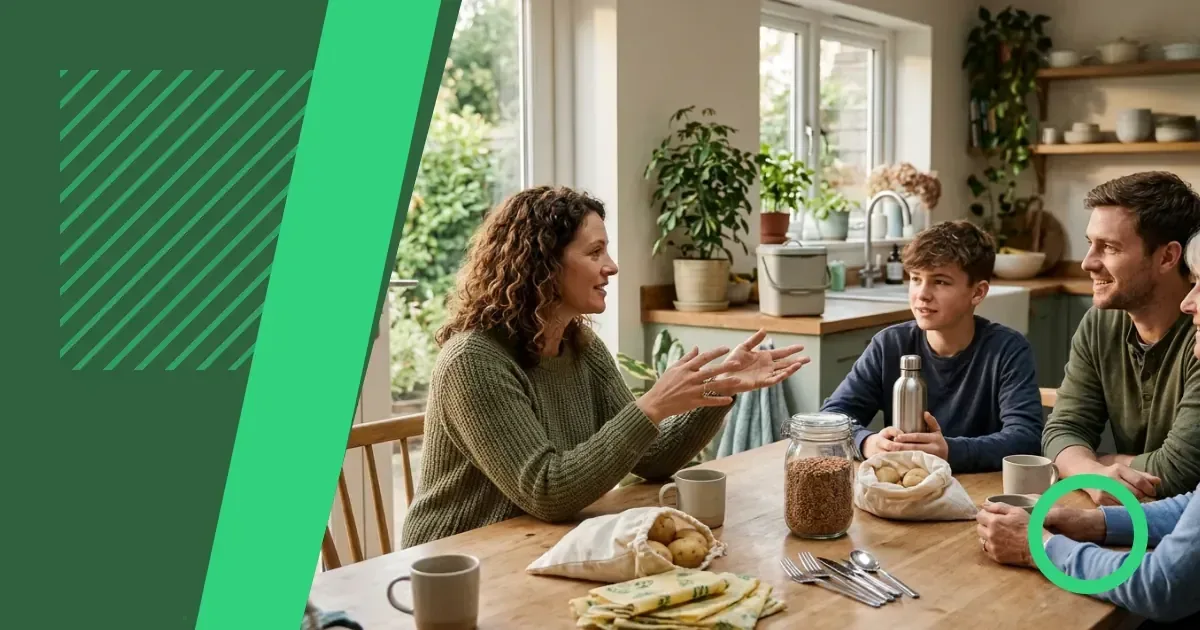
Not everyone in your home needs to care about waste reduction before you can start making changes together. The gap between what you want to do and what your household is ready for is normal—and bridgeable. This article gives you conversation starters that work, ways to frame waste reduction as practical rather than preachy, and compromise strategies that let different priorities coexist.
Starting the conversation without judgment
The moment you tell someone they should care about waste, you've often lost them. Instead, start with what already matters to them. If your household is tight on money, waste reduction saves pounds. If someone hates mess, reducing clutter is the same skill. If energy costs worry them, less packaging means less to recycle and less to throw away.
Ask questions rather than announce change. "What do you think happens to the stuff we throw away?" or "Do you find we end up with too much junk?" are invitations to think, not lectures. Listen to the answer. You might learn that your mum worries about food waste, your partner is frustrated by packaging, or your teenager wants to do something that feels less pointless than recycling.
Pick one specific frustration rather than "we need to go zero waste". Nobody wants a lifestyle overhaul imposed on them. But "we're spending a fortune on bin bags and I keep forgetting what we're already recycling" is a solvable problem everyone can get behind.
Finding the entry point for each person
Different people in your household will care about different things. Your entry point might be plastic. Someone else's might be that food waste feels wrong, or that shopping bags pile up, or that they hate single-use convenience packaging.
Start where one person is ready. If your partner is willing to try reusable shopping bags but thinks composting is extra, start with bags. If your teenager will help sort recycling but won't cook from scratch, don't tie those things together. Each small agreement is a win and a conversation later.
Avoid the trap of making waste your thing. If you're the only person who cares, you end up as the household's waste manager—reminding, sorting, nagging. That burns you out and annoys everyone else. Instead, make changes that don't need policing. If everyone has a reusable water bottle by the kettle, nobody thinks about it. If the compost bin sits in the kitchen, someone will use it without your prompting.
Framing waste reduction as practical, not virtuous
Language matters. "This is better for the planet" sounds like a burden. "We'll have less to lug to the bin" sounds like relief. "I hate buying a new one of these every week" sounds like genuine frustration. "The landfill is suffering" sounds like judgment.
Tie waste reduction to benefits the other person actually experiences. Less packaging means less to unpack and less recycling to sort. Buying in bulk costs less per item. Cloth napkins don't run out mid-dinner. Storing food properly means less ends up in the bin and more money stays in your account.
Never frame it as a moral failure if someone doesn't do it your way. When someone buys a packaged product, that's a choice they made, not a betrayal. When they forget the bags, they're human, not uncommitted. That distinction keeps the conversation about practical choices rather than character.
Strategies for households that disagree
You don't need everyone to agree to make progress. These strategies let different priorities sit alongside each other without conflict.
- The split system. You handle your own waste the way you want. Someone else handles theirs. That means your compost bin is yours, your reusable containers are your system, your refill trips are your choice. It removes the feeling of being forced and the pressure to convert. Often, people become curious without being pushed.
- Low-barrier entry points. Pick one change that's genuinely convenient for everyone—not just convenient for you. If reusable bags live in the car, everyone will use them. If a compost bucket sits where people naturally scrape plates, they will use it. If a box for old clothes lives in the spare room, people donate to it without thinking.
- Financial incentives. If someone won't reduce waste for the planet, show them the money. A year of reusable bags costs far less than a year of plastic ones. Bulk buying usually works out cheaper. Mending rather than replacing saves money. Make the maths clear without preaching it.
- The "I'll handle it" boundary. If you want to do something nobody else is ready for—like refusing plastic bags or making cleaning products—do it. Don't ask permission. Don't ask anyone else to do it your way. Do your thing quietly and let results speak.
Dealing with objections you'll hear
| What they might say | What's behind it | A practical response |
|---|---|---|
| "It won't make any difference." | Scale fatigue—the problem feels too big | "True, but it makes a difference to our bin and our money. And if everyone thought like that, nothing would change." |
| "It's too much hassle." | They're imagining more work than there is | "Let me handle the fiddly bits. You just keep the containers in your space." Or show them how much easier one change actually makes things. |
| "Other people are worse, so why bother?" | They're comparing instead of thinking independently | "We can only control what we do. I'd rather not throw away money and resources just because someone else does." |
| "This is new-age nonsense." | They associate waste reduction with a lifestyle they don't relate to | Skip the language about the environment. Talk about practicality: "My gran didn't throw things away. I'm just not buying what we don't need." |
Making it easier than not doing it
The secret to household buy-in isn't motivation—it's friction. If the reusable system is easier than the single-use one, people will use it. If the compost bin is closer than the bin, things go in it. If the "donate" box is visible and accessible, people use it.
Set up your changes so the path of least resistance leads where you want it to go. Keep reusable bags by the door. Put a collection box where people naturally gather things they don't want. Store leftovers in clear containers so they're not forgotten at the back of the fridge. Label things if it helps. Make it visible. Make it easy.
The less someone has to think, the more likely they'll participate. And that's when real change starts.
When you live with someone who actively resists
Sometimes compromise isn't enough because one person is hostile to the whole idea. That's harder to solve. In that case, focus on what's genuinely in your control: your own habits, your own purchasing, your own space. Don't make the issue bigger by trying to convert them. Living your values quietly is often more powerful than arguing for them.
If you share finances, you might have more room to make decisions together about joint spending—like which products the household buys or how much you budget for waste. If you don't, you do what you can in your space and let that be enough.
Reframing waste as a shared problem, not your crusade
The shift that usually works is when someone stops seeing waste reduction as your thing and starts seeing it as a household thing. That happens when you stop positioning it as the moral choice and start positioning it as the practical choice. When it saves time. When it saves money. When it makes sense.
You can't force that shift. But you can create conditions for it. You do that by being patient, not preachy. By showing rather than telling. By picking entry points people are already interested in. By removing friction. And by letting go of the need for everyone to care the way you do.
#Composting #Recycling #Plastic-free
Download PDF: Starting waste conversations at home PDF, 27 KB
Frequently asked questions
How do I convince my family that waste reduction is worth the effort?
Skip the persuasion. Instead, show the practical benefits: less money spent, less time managing recycling, less clutter. Start with one small change that matters to them, not you. People move when they see a reason, not when they're told they should.
What if one person in my household refuses to cooperate?
You can't change someone who isn't ready. Focus on what you control: your habits, your space, your choices. Keep your changes simple enough that they don't require other people to do extra work. Often, people become curious when they see that waste reduction makes life easier, not harder.
How do I stop waste reduction from becoming my responsibility alone?
Make the systems easy enough that they run without you managing them. Put reusable bags where people grab them, put compost where people naturally scrape plates, make labelling clear so sorting doesn't need explanation. When it's effortless, people participate without being asked.