Disposing of electronics responsibly: routes for phones, laptops and small appliances
 Save
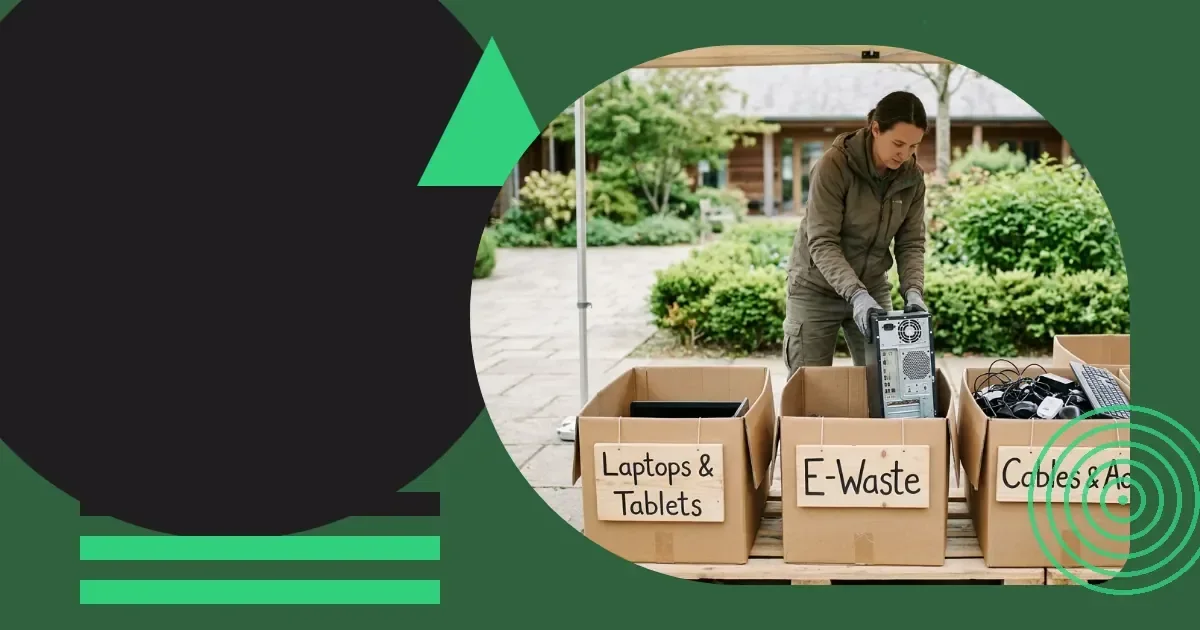
Old electronics belong in a recovery system, not landfill. UK law requires retailers and councils to collect waste electrical and electronic equipment so materials can be separated and reused. Ecomojo walks you through the options for phones, laptops, cables and kitchen appliances — from collection points to repair cafés that extend a device's working life.
Retailer take-back schemes
Any shop selling new electrical goods must accept your old ones for recycling, whether you buy something or not. This applies to supermarkets, electronics chains and DIY stores. The device you hand in doesn't need to match what you're buying — you can drop off a kettle when purchasing a laptop.
Larger stores often have a collection bin near the entrance for small items such as phones, chargers and cables. For appliances like microwaves or printers, ask at the customer service desk. Some retailers collect from your home when delivering a replacement item; confirm this when placing the order.
What counts as small
Items under 25 centimetres in any direction — roughly the size of a toaster — can be handed over without purchasing a replacement. Anything larger falls under like-for-like take-back: the shop accepts it when you buy an equivalent new product.
Council collection points and kerbside schemes
Every UK local authority runs Household Waste Recycling Centres that accept electronics. Some operate separate drop-off points in car parks or outside libraries. Check your council's website for addresses and opening hours, which vary widely.
A growing number of councils collect small electrical items from the kerbside alongside your usual bins. You'll be asked to leave them in a clear bag on a specified collection day. Batteries must be taped over the terminals to prevent fire risk during transport.
Preparing devices for collection
Remove personal data from phones and laptops before handing them over. A factory reset handles this on most devices; check the manufacturer's instructions if you're unsure. Take out SIM cards and memory cards. Batteries in rechargeable devices can usually stay in place unless the council's guidance says otherwise.
Donation and resale for working devices
A device that still powers on has more than one route out of your home. Charities such as Community TechAid refurbish laptops and tablets for people who need them, particularly students and job seekers. Some accept phones; call ahead to confirm what they take.
Local Repair Cafés sometimes broker donations directly to people in the area. If the device works but needs a small fix — a cracked screen, a worn charging port — the café's volunteers may repair it on the spot and pass it on. You can read about community swap events to understand how items find new owners locally.
Online resale platforms such as Music Magpie and Mazuma Mobile pay for working phones and tablets. You post the device in their prepaid envelope; payment arrives after they've tested it. The amount depends on age, condition and model. Phones that no longer function fetch little or nothing, but the platforms still recycle them at no cost to you.
Repair over replacement
A device with a single fault often costs less to mend than replace. Repair Cafés offer free diagnosis and labour; you cover parts if needed. Volunteers work on laptops, phones, small kitchen appliances and audio equipment. Sessions run monthly in village halls, community centres and libraries. The Restart Project maintains a calendar of events across the UK.
Independent repair shops charge for their work but can tackle jobs beyond a volunteer's toolkit — logic board repairs, soldering and component-level fixes. Ask for a quote before committing. Some manufacturers now publish repair guides and sell spare parts directly, making home fixes possible if you're comfortable with a screwdriver.
WEEE regulations and the crossed-out wheelie bin symbol
The symbol of a bin with a cross through it marks items covered by the Waste Electrical and Electronic Equipment regulations. It means the item must not go in your household rubbish. Anything with a plug, a battery or a charging cable carries this requirement — from toothbrushes to televisions.
When you see this symbol, the routes above apply: retailer take-back, council collection or repair. The rules exist because electronics contain metals and plastics that can be recovered, alongside small amounts of hazardous substances that need controlled processing.
Batteries, bulbs and cables as separate streams
Batteries come out of most devices before recycling, but they need their own drop-off point. Supermarkets and DIY stores place battery bins near the tills. Tape over the terminals of nine-volt and lithium cells to stop them shorting in the bin.
Light bulbs — particularly LEDs and energy-saving types — also belong in dedicated containers at council sites and larger retailers. Cables go in small electricals collection; chargers follow the same route as the device they powered.
Steps to recycle an old phone today
- Back up photos and contacts to cloud storage or a computer.
- Perform a factory reset through the phone's settings menu.
- Remove the SIM card and any memory card you've added.
- Find your nearest retailer take-back point or arrange free postal recycling through an online platform.
- Drop off or post the device, keeping any proof of recycling for your records.
Comparison of disposal routes
| Route | Best for | Cost | Effort |
|---|---|---|---|
| Retailer take-back | Small items, quick drop-off | Free | Low |
| Council collection | Large appliances, bulk clear-outs | Free | Medium |
| Donation to charity | Working devices | Free | Medium |
| Repair Café | Fixable faults | Free labour, parts extra | High |
What happens after collection
Collected electronics reach a materials recovery facility where manual sorters separate items by type. Machines then shred devices into fragments. Magnets pull out steel, eddy currents recover aluminium and copper, and dense media separation isolates plastics from glass and circuit boards.
Circuit boards go to specialist smelters that extract precious metals. Plastics are cleaned and pelletised for new products. Glass from screens becomes cullet for new glass manufacture. The process isn't perfect — some materials downcycle into lower-grade uses — but it beats the alternative of mining fresh resources and losing functional components to landfill.
For more on how materials move through recovery systems, see our guide to what happens to recycling after the lorry leaves your street.
Items that fall outside standard routes
Some electronics need specialist handling. Smoke alarms contain low-level radioactive sources and must return to the manufacturer or go to a council hazmat collection day. Ink and toner cartridges have their own postal return schemes run by the original manufacturers; envelopes arrive with the replacement.
Medical devices such as blood pressure monitors and nebulisers should be checked with the manufacturer before disposal. Some take them back for safe recycling; others treat them as standard small electricals once batteries are removed. If you're managing waste across other areas of the home, disposing of old bedding responsibly follows a different set of routes.
Storage while you wait to recycle
Old electronics pile up faster than most people expect. Keep a single box in a cupboard for items awaiting recycling. Cables tangle and small chargers disappear into corners; a dedicated container stops them migrating around the house.
Check the box every few months and take a batch to a collection point or retailer in one trip. Storing devices safely means keeping them dry and away from heat sources. Lithium batteries degrade over time, so don't leave old phones in the box for years — recycle them within a reasonable span.
Download PDF: Electronics recycling checklist PDF, 28 KB
Further reading
Frequently asked questions
Where can I recycle an old phone in the UK?
Any retailer selling electrical goods must accept your old phone for recycling, even if you don't buy anything. You can also use free postal recycling schemes such as Music Magpie or Mazuma Mobile, or drop it at your local council recycling centre.
What is WEEE recycling?
WEEE stands for Waste Electrical and Electronic Equipment. It covers anything with a plug, battery or charging cable. Items marked with a crossed-out wheelie bin symbol must be recycled through retailer take-back, council collection points or repair schemes, not thrown in household rubbish.
Can I donate a laptop that still works?
Yes. Charities such as Community TechAid refurbish working laptops and pass them to people who need them. Repair Cafés also broker local donations. Factory reset the device and remove your personal data before handing it over.