What to do with old bedding: 7 ways to reuse, donate or recycle
 Save
Old bedding doesn't have to end up in the bin. Sheets, duvet covers and towels can be mended, passed on to charity shops, cut into cleaning cloths or taken to textile recycling banks across the UK. Ecomojo walks through the options in order of environmental impact, so you can pick the one that fits the condition of what you're clearing out.
Repair and keep using
A small tear or a worn patch doesn't make a sheet unusable. Sewing up a split seam or patching a hole with fabric offcuts extends the life of bedding by years. If the middle of a fitted sheet has thinned, you can unpick the elastic, cut away the worn section and re-sew the edges.
Duvet covers with broken zips are worth fixing: replacement zips cost less than new bedding, and most dry cleaners or alteration services will fit one. Towels with frayed edges can be trimmed and hemmed. The longer something stays in use, the less demand there is for new textiles.
Pass on to someone who needs it
Bedding in good condition — clean, intact, free of stains — can go to charity shops, homeless shelters or refugee support organisations. Many animal shelters accept old towels and sheets for bedding in kennels and cages. Phone ahead to check what each organisation needs: some only take certain sizes or types.
Community groups on social media often have members looking for household textiles. Listing bedding as free to collect saves it from landfill and helps someone furnish a home without buying new.
What counts as good condition
Charity shops usually want bedding that looks and smells like something a customer would buy. Faded colours are fine; holes, permanent stains or strong odours that won't wash out are not. If you wouldn't give it to a friend, it probably isn't right for donation.
Turn into cleaning rags and household cloths
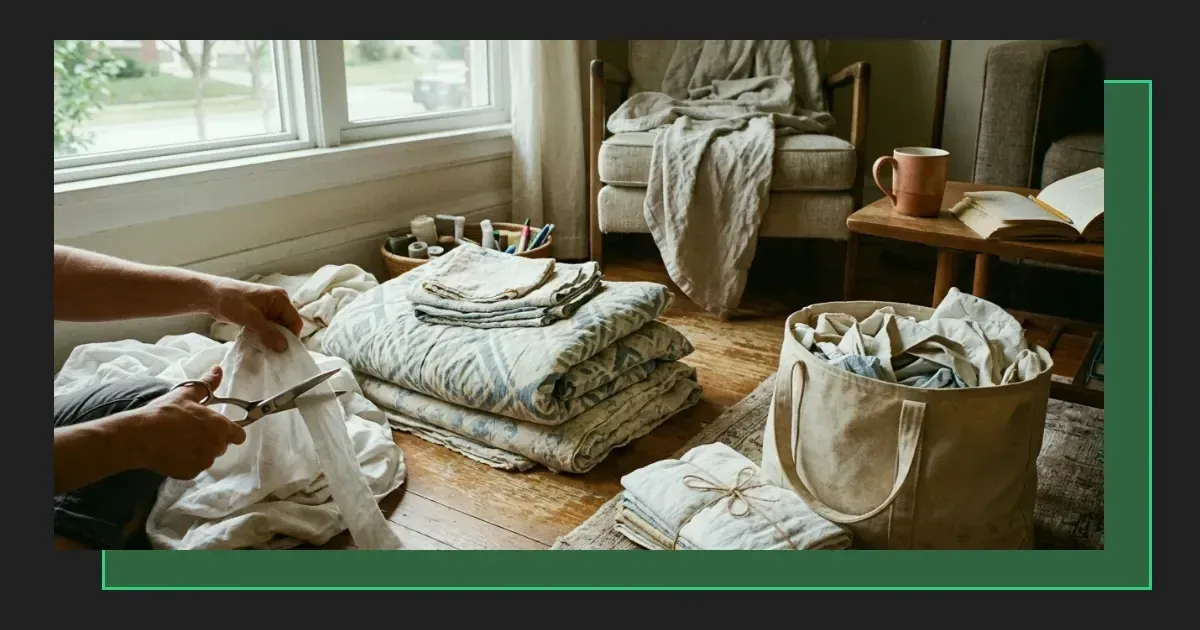
Worn sheets and towels make excellent cleaning cloths. Cotton absorbs spills, and old bedding is already soft enough not to scratch surfaces. Cut sheets into squares for dusting, polishing or wiping down worktops. Towels work well for mopping up spills or cleaning the car.
Store a stack of rags under the sink and wash them with your usual laundry. One double sheet can yield dozens of cloths, and you'll buy fewer disposable wipes. This is the best route for bedding that's too worn to donate but still has absorbency left.
Upcycle into other household items
Old bed linen can be sewn into shopping bags, cushion covers, napkins or patchwork quilts. Duvet covers have enough fabric for an apron or a laundry bag. Towels can become bath mats or pet blankets. If you don't sew, local repair cafés often hold textile workshops where volunteers help with projects.
Upcycling takes time, so only commit to it if you'll use what you make. A drawer full of half-finished projects isn't better than responsible disposal.
Take to a textile recycling bank
Textile banks accept bedding in any condition, including items too damaged to donate or reuse. The collected fabric is sorted: some is resold, some is turned into industrial rags, and some is shredded for insulation or padding. Look for banks at supermarket car parks, recycling centres or using the Recycle Now locator online.
Bag bedding separately from clothes, and check the bank's label to confirm it takes household textiles. Some councils also collect textiles from the kerbside — check your local authority's website for details.
Why textile banks matter
Every tonne of textiles sent for recycling saves landfill space and reduces the demand for virgin cotton, which uses substantial amounts of water to grow. Even worn-out fabric has value in the circular economy when it's directed to the right place.
Compost pure natural fibres
Bedding made entirely of natural fibres — cotton, linen, bamboo — can be composted at home if it's free of synthetic thread, zips and buttons. Cut the fabric into small pieces to speed decomposition, and mix it with green waste to balance the compost. Avoid towels with rubberised backing or sheets with polyester blends.
This option works for small amounts. For larger quantities, textile recycling is more practical.
Steps to clear out bedding responsibly
- Sort by condition: separate items that are still usable from those that are worn through.
- Mend what you can or set aside anything worth repairing.
- Wash everything before donating or recycling — most organisations won't accept soiled textiles.
- Research local charities, animal shelters and textile banks to find the best fit for each item.
- Cut worn bedding into rags and store them where you'll actually use them.
- Bag textiles for recycling separately and drop them at a collection point within the week.
When to let go
Holding onto bedding you'll never use again just moves the problem to another room. If sheets have been in the cupboard untouched for over a year, it's time to decide. The circular economy relies on things moving to where they're needed, not sitting in storage.
Make the call, then act on it. Bedding takes up space, and the longer it sits, the less likely you are to deal with it.
| Option | Best for | Environmental impact |
|---|---|---|
| Repair and keep | Small damage, otherwise sound | Lowest – no new resources |
| Donate | Good condition, clean | Low – extends life |
| Reuse as rags | Worn but absorbent | Low – replaces disposables |
| Upcycle | Surplus fabric, sewing skill | Moderate – depends on use |
| Textile recycling | Any condition | Moderate – diverts from landfill |
| Compost | Pure natural fibres only | Moderate – small scale |
What happens to recycled textiles
Once bedding reaches a textile recycling facility, it's graded by type and condition. Usable items are sold secondhand, often overseas. Worn textiles become industrial wiping cloths or are processed into insulation, carpet underlay or stuffing for furniture.
A small percentage is downcycled into lower-grade products. The system isn't perfect, but it keeps thousands of tonnes of fabric out of landfill each year. Every item diverted reduces the pressure on raw materials and manufacturing.
Avoiding the problem next time
Buying bedding that lasts reduces how often you need to replace it. Look for tightly woven cotton with a thread count that suits your budget, and wash at lower temperatures to preserve fibres. Rotating two sets instead of one spreads wear more evenly.
When something does wear out, you'll know exactly where to send it. The hierarchy stays the same: keep using, pass on, repurpose, recycle. Throwing away is the last resort, not the default.
#Recycling #Reusable containers
Download PDF: Bedding clear-out checklist PDF, 27 KB
Further reading
Frequently asked questions
Can you recycle bed sheets in the UK?
Yes. Textile recycling banks at supermarkets and recycling centres accept bed sheets in any condition. The fabric is sorted and either resold, turned into industrial rags or processed into insulation.
What can I do with old towels that are too worn to donate?
Cut them into cleaning rags, offer them to animal shelters for bedding, or take them to a textile recycling bank. Worn towels still absorb liquid and work well for household cleaning tasks.
Do charity shops accept duvet covers with small stains?
Most won't. Charity shops need bedding they can sell, and permanent stains make items harder to shift. If a stain won't come out in the wash, the item is better suited to reuse as rags or textile recycling.
Can you put old bedding in the compost bin?
Only if it's made entirely of natural fibres like cotton or linen, with no synthetic thread or fastenings. Cut it into small pieces and mix it with green waste to help it break down.
Where can I find textile recycling banks near me?
Check the Recycle Now website for a map of collection points, or look in supermarket car parks and at your local recycling centre. Some councils also collect textiles from the kerbside.
Is it better to upcycle old sheets or recycle them?
If you'll use what you make, upcycling keeps fabric in circulation longer. If the project will sit unfinished, textile recycling is more practical and ensures the material is processed properly.