What you can compost at home: 8 categories that settle the question
 Save
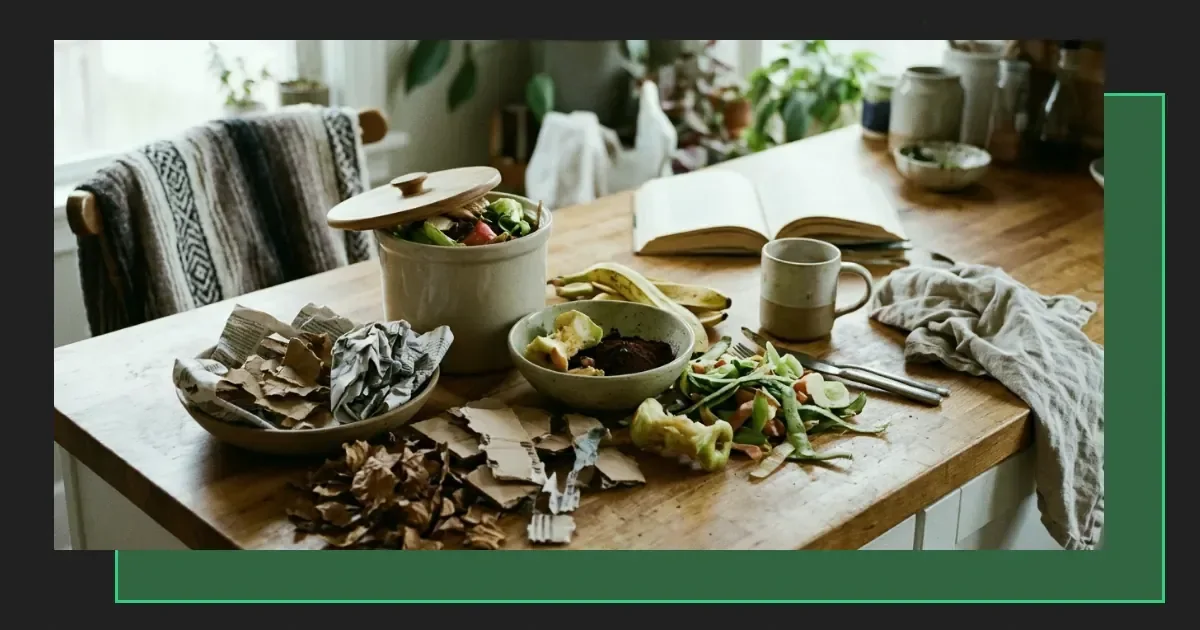
You can compost fruit and vegetable scraps, coffee grounds, eggshells, cardboard, paper and garden waste at home. These materials break down into usable compost within a few months. Meat, dairy, cooked food, pet waste and anything synthetic stay out: they attract pests, smell or don't decompose. Ecomojo walks you through what goes in, what stays out and why each rule exists.
Raw fruit and vegetable scraps
All raw fruit and vegetable waste goes straight into the compost bin. Peelings, cores, stalks, wilted salad leaves, overripe produce and the tops you trim off carrots or leeks break down quickly and add nitrogen. Citrus peel takes longer than softer material but still composts without trouble.
Onion skins, garlic papers and the outer leaves of cabbages work just as well. Avocado stones and corn cobs take longer because of their density: chop them smaller to speed things up. Mouldy fruit is fine—the rot is already doing the work you want.
Coffee grounds and tea
Used coffee grounds, paper filters and loose tea leaves are all compostable. They add nitrogen and help balance the brown material in the bin. Tea bags made entirely of paper can go in whole; those with plastic seals or staples need the non-paper parts removed first.
Rinse nothing. The damp grounds and leaves are already in the right state to break down, and they introduce helpful microbes. If you drink a lot of coffee, scatter the grounds through the bin rather than dumping them in one clump—they compact when wet.
Eggshells and nutshells
Eggshells compost well and add calcium. Crushing them speeds up breakdown; whole shells take months. Nutshells from almonds, walnuts and hazelnuts also work, though they're slow. Shells from peanuts and pistachios go in too.
Skip shells from salted or flavoured nuts if the coating is heavy—you don't want to add salt or sugar to the heap. Plain roasted shells are no problem.
Paper and cardboard
Plain cardboard, newspaper, brown paper bags and shredded office paper all compost. They count as brown material, which balances the green waste and keeps the bin from turning slimy. Tear or shred large pieces so they don't mat together and block air.
Avoid glossy paper, magazines, wrapping paper with metallic finishes and anything laminated or wax-coated. Pizza boxes with grease stains are fine if you tear out the soiled bits—the clean cardboard goes in, the oily parts stay out. Receipts printed on thermal paper are not compostable.
Garden waste
Grass clippings, leaves, weeds without seeds, prunings and dead flowers all belong in the compost. Grass adds nitrogen but heats up and smells if you pile it thickly; mix it with drier material. Autumn leaves are ideal brown matter—shred them if you can, or let them sit longer.
Weeds that have gone to seed should stay out unless you're confident your heap gets hot enough to kill them. Diseased plant material also stays out to avoid spreading blight or mildew. Thorny prunings compost but take time; chopping them makes handling easier.
What not to compost
Meat, fish, bones, dairy and cooked food attract rats and smell as they rot. They don't belong in a standard home compost bin. The same goes for pet waste from cats and dogs—it can carry pathogens that survive composting. Animal bedding from herbivores such as rabbits or guinea pigs is fine.
Anything synthetic or treated stays out: plastics, metals, glass, coal ash, treated wood and anything with paint or varnish. Vacuum-cleaner dust often contains synthetic fibres, so it's safer left out. If you're not sure what something is made of, bin it rather than compost it.
Items that need a second look
Bread, pasta and rice technically compost but attract pests and can go mouldy in ways that slow breakdown. Many people leave them out. If your bin is rodent-proof and you bury them in the middle of the heap, they'll break down.
Sawdust from untreated wood is compostable and counts as brown material. Sawdust from MDF, plywood or anything treated with chemicals is not. Hair and nail clippings compost, though hair takes a long time. Used matches and wooden toothpicks work if they're plain wood.
Getting the balance right
A working compost heap needs roughly equal parts green material—fruit and vegetable scraps, grass, coffee grounds—and brown material—cardboard, paper, dry leaves. Greens add nitrogen and moisture; browns add carbon and structure. Too much green turns the bin slimy and smelly; too much brown slows everything down.
Turn the heap every few weeks to let air in. Decomposition needs oxygen, and a heap that sits untouched can turn anaerobic and start to stink. Add water if it's dry, or more browns if it's too wet. The finished compost smells earthy and crumbles when you squeeze it.
Steps to start composting this week
- Set a small lidded container on the kitchen counter or under the sink for daily scraps.
- Choose a spot outside for your compost bin or heap, ideally on soil rather than paving.
- Start with a layer of twigs or scrunched cardboard at the bottom to help drainage.
- Add your first mix of greens and browns, then cover with a handful of soil or finished compost to introduce microbes.
- Keep a small stack of torn cardboard or dry leaves nearby to throw in whenever you add wet scraps.
| Material | Category | Breakdown time | Notes |
|---|---|---|---|
| Vegetable peelings | Green | Fast | High in nitrogen, add moisture |
| Coffee grounds | Green | Fast | Balance with browns to avoid clumping |
| Cardboard | Brown | Moderate | Shred or tear; avoid coated types |
| Autumn leaves | Brown | Slow | Shredding speeds breakdown |
| Eggshells | Neutral | Slow | Crush to speed up |
Composting redirects a third of household waste from landfill and gives you free soil improver for the garden. Start with what you already throw away, and the habit builds itself. If you want to understand how this fits into a broader system of keeping materials in use, our guide to circular economy meaning explains the thinking behind it.
This article is for general information only. Ecomojo does not sell any goods or services.
#Composting #Recycling #Kitchen swaps
Download PDF: Home composting: what goes in and what stays out PDF, 29 KB
Further reading
Frequently asked questions
Can you compost cooked food at home?
Cooked food attracts pests and smells as it rots, so most home composting guides recommend keeping it out. If your bin is fully enclosed and rodent-proof, small amounts buried in the centre may break down, but it's safer to avoid it.
What should you never put in a compost bin?
Meat, fish, dairy, pet waste from cats or dogs, and anything synthetic or treated with chemicals should never go in. These materials attract pests, carry pathogens or won't decompose.
How do you know if something is compostable?
If it came from a plant and hasn't been treated, coated or mixed with synthetic materials, it's likely compostable. When in doubt, check whether it would rot naturally if left outside—plastics, metals and treated wood won't.